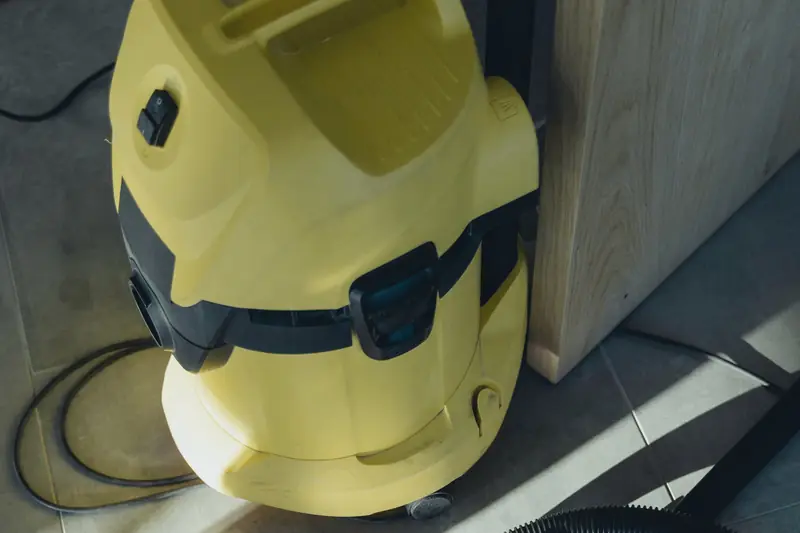
What Size Shop Vac Do I Need? How to Choose One
Tank size, airflow vs peak HP, HEPA filters and dust safety.
Quick answer
Match the tank size to the mess, look at airflow and suction instead of "peak HP," and use a HEPA filter for fine dust. A HEPA filter can theoretically remove at least 99.97% of particles at 0.3 microns (EPA). For silica dust from concrete or masonry, OSHA calls for a vacuum filter with 99 percent or greater efficiency (OSHA FS-3630).
Jump to section
Tank size by job
The tank holds what the vacuum picks up. A bigger tank means fewer trips to empty it, and a smaller one is lighter and easier to store. We do not give a gallon number for each job, because there is no single right size and makers list tank size differently. Use your jobs as the guide.
For a car interior and small garage messes, a compact tank is easier to carry. For a basement cleanup, a workshop with a miter saw or a renovation, a larger tank saves emptying. If you pick up water, check that the vacuum is a wet/dry model and set it up the way the manual shows. Our shop vac page lists tank size in the first column of its spec table. Think about where the vacuum will live, too. A big tank is no use if it does not fit the shelf or if you will not lug it up the basement stairs. Make sure you can empty it without making a bigger mess, which is easier with a bag or a liner, as the manual describes.
Airflow vs suction vs "peak HP"
Three numbers appear on many boxes. Airflow, usually in CFM, tells you how much air moves through the hose. Water lift, in inches, tells you how hard the vacuum can pull. Peak horsepower is a motor figure that makers define in their own ways.
We avoid numbers here, because makers do not define these terms the same way. Use the idea instead: airflow and suction describe what the vacuum does at the hose, while peak horsepower is a motor rating. When two listings differ, give more weight to airflow and water lift, and treat peak HP as a marketing number. Our buying page has columns for each. When a listing gives only a peak horsepower figure, look for the airflow and water lift on the maker's spec sheet, and be careful about comparing numbers that the makers define differently. If a maker's own sheet is cited next to a number, you can trust that the number means what the sheet says it means, and nothing more.
Standard vs HEPA filters
A standard filter catches sawdust and grit. It may pass fine dust back into the room. A HEPA filter is designed for fine particles. The EPA says a HEPA filter "can theoretically remove at least 99.97%" of particles 0.3 microns in size. That size is the worst case, so larger and smaller particles are trapped even more efficiently (EPA).
Check whether a HEPA filter is available for your model, and whether it fits the vacuum as sold or is an extra. Some vacuums use a HEPA-rated filter as a replacement for the standard one. Read the manual to see how to change it and when.
Fine dust: drywall, concrete, old paint
Fine dust is where a vacuum's filter matters most. Here are three cases, each with its source.
Silica dust from concrete or masonry. OSHA calls for a vacuum dust collector with an "air filter with a 99 percent or greater efficiency and a filter cleaning mechanism" (OSHA FS-3630). OSHA also says not to use compressed air or blowers to clean dust off surfaces, clothing or filters, because it raises silica exposure. Use a HEPA vacuum or wet methods (OSHA FS-3630).
Old paint. The EPA says homes built before 1978 may have lead-based paint. If you cannot tell the age of your home, assume the work area has lead paint. Its lead-safe practices for do-it-yourselfers are to use power tools with HEPA vacuum attachments, vacuum the work area often with a HEPA vacuum, then wipe surfaces with wet disposable cloths (EPA). The EPA's RRP Rule generally does not apply to homeowners working in their own home, so these practices are recommended, not required (EPA).
Drywall dust. The same HEPA idea applies, because the dust is fine and spreads easily. Our shop vac page flags models with HEPA filters available. Whatever the dust, a vacuum is only part of the answer. Keep the work area closed off from the rest of the house when you can, and clean up with the vacuum and with damp wipes rather than sweeping, which sends fine dust back into the air.
Hose and accessories
A wider hose clears bigger debris and sawdust. A longer hose reaches farther without moving the vacuum. Check the hose size in the listing, and count the accessories that come in the box. A crevice tool, a floor nozzle and an extension wand cover most home jobs.
Check that the hose connections are tight and that the filter is seated before you switch on, because a loose connection lets fine dust bypass the filter. A hose that connects to your saw's dust port turns the vacuum into dust control at the source, which is better than cleaning up afterward. If you own a miter saw, check the port size on the saw and the hose adapter that fits it.
Noise
Shop vacs are loud. NIOSH lists vacuums and power tools among equipment around 85-90 dBA, so plan on hearing protection (NIOSH). If the listing gives a noise figure, compare it, and expect a vacuum used alongside a saw to add to the noise you already have. NIOSH's limit is 85 dBA averaged over 8 hours, and for each 3 dBA increase the safe time is halved (NIOSH).
Cordless options
A cordless shop vac goes where there is no outlet, and cleans a car, an attic or a worksite without an extension cord. It runs for a limited time and is usually smaller, so it suits light work. If you already own a battery platform, a bare tool that fits your batteries may be a good value. Our battery care guide covers charging and storage rules.
Whichever type you buy, empty the tank and clean or replace the filter as the manual says. A clogged filter lowers suction and lets dust escape. Keep a spare filter on hand if you work with fine dust often. Store the hose coiled and the accessories together, so you can find them when a job comes up, and wear hearing protection whenever you run the vacuum for more than a short job. Here is a quick checklist before you buy:
- Decide what you will pick up: sawdust, water, fine dust or all three.
- Pick a tank size that fits your biggest job and your storage space.
- Compare airflow and water lift, not just peak HP.
- Confirm a HEPA filter is available if you will vacuum fine dust.
- Check the hose size and the accessories in the box.
- Plan for hearing protection.
Gear that helps
-
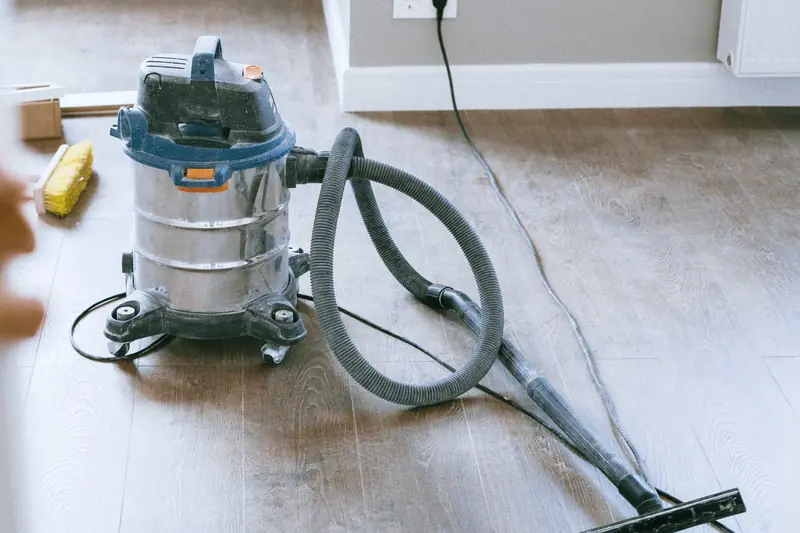
Best Shop Vacs (Wet/Dry)
Compare tank, airflow, HEPA availability, hose and noise in one table.
-
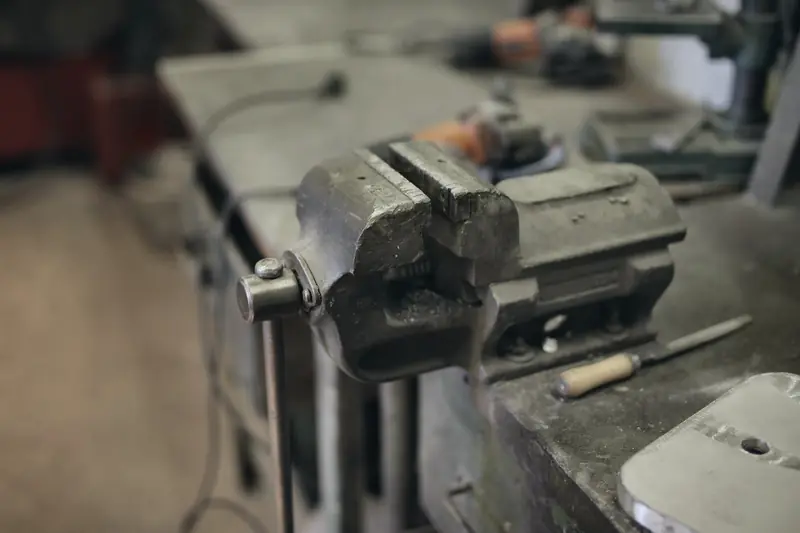
Best Workbenches for Garage and DIY
A bench with storage keeps hoses and accessories off the floor.

FAQ
What does HEPA mean?
A HEPA filter can theoretically remove at least 99.97% of particles 0.3 microns in size (EPA).
Can I blow dust off with compressed air?
No. OSHA says not to use compressed air or blowers to clean dust off surfaces, clothing or filters, because it raises silica exposure (OSHA FS-3630).
Related
-
-
Buying guide
Best Workbenches for Garage and DIY
Load capacity, top material, height and storage, compared.
-
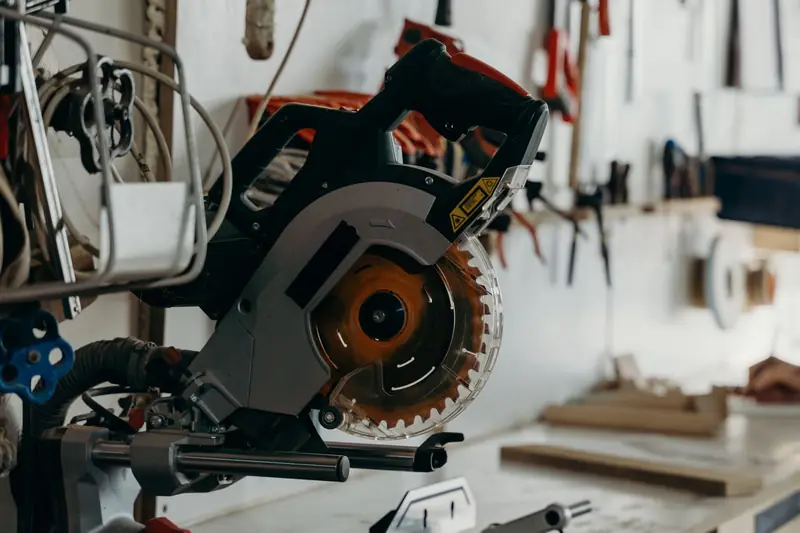
Buying guide
Best Miter Saws for Beginners and Home Projects
Blade size, sliding or fixed, bevel and dust port, side by side.
-

-
Guide
How to Use a Circular Saw Safely: A Beginner Guide
Guard, blade depth, support, kickback and grip, step by step.
-
Buying guide
Best Cordless Circular Saws
Blade size, cut depth, brake and weight, plus the safety checks.

Get the Before-You-Cut Safety Checklist
A printable 8-point check to run before you cut, drill or charge: guards, blade depth, clamping, protection and batteries. Free, and sized for the shop wall.